

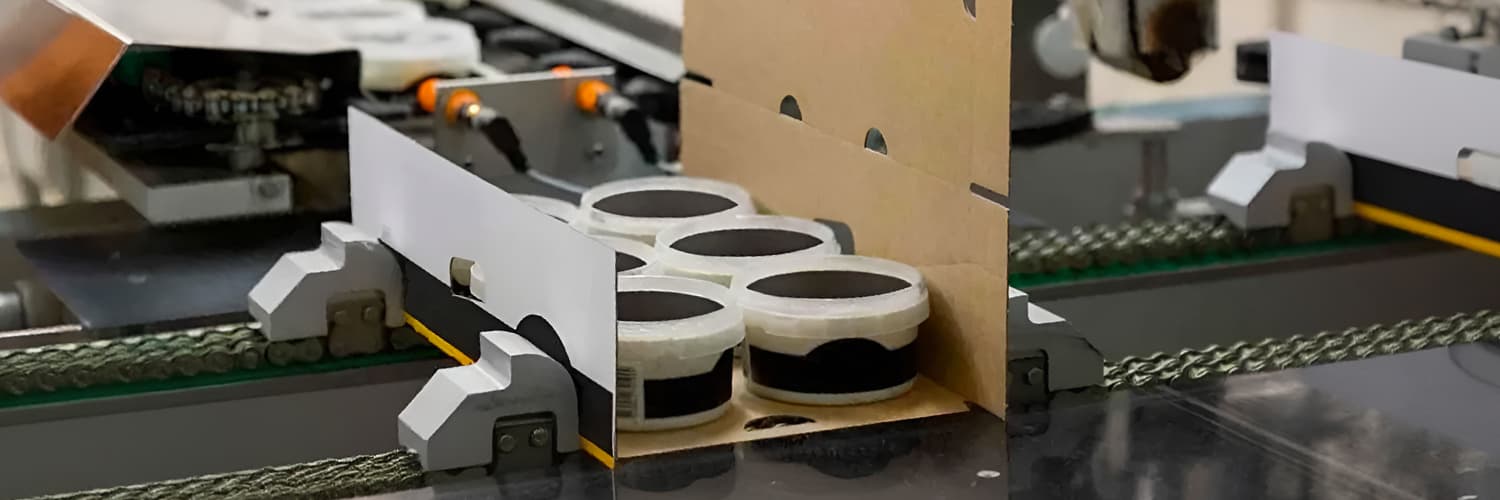

Saudi Arabia’s confectionery sector is growing rapidly, driven by rising consumer demand, an expanding retail landscape, and national initiatives to boost local manufacturing, automation, and self-sufficiency under Vision 2030. Within this landscape, biscuit production stands out for its high-volume, high-speed nature. Yet, one of the biggest bottlenecks in biscuit manufacturing isn't baking, it’s packaging.
Manual and semi-automated packaging methods struggle to keep up with the required speed, hygiene, and consistency. At the same time, traditional mechanical sub-systems are quickly becoming obsolete. These systems lack the adaptability, precision, and scalability required for modern operations.
Modern robotic packaging solutions, such as Multipack machines and robotized Pick & Place packaging systems, are rapidly replacing outdated mechanical systems. Designed with modularity at their core, today’s robotic packaging machines consist of multiple robotic modules, each tailored to a specific function. These systems offer critical advantages:
✅ Flexibility
A single robotic system can perform a variety of packaging tasks simply by reconfiguring its modules. This allows for quick SKU changeovers and easy setup for new product lines, critical in a market that demands product variety and seasonal adaptability.
✅ Adaptability
Robotic systems can be tailored for diverse confectionary formats and packaging requirements, future-proofing operations against changing consumer preferences and market dynamics.
✅ Reliability
With consistent, scalable modules, robotic machines offer dependable performance and easier maintenance. Each module can be replicated or replaced with minimal downtime, ensuring continuous operation.
Solving Real Problems in Saudi Confectionary Manufacturing
In Saudi Arabia, confectionary producers face a unique set of operational challenges that robotic packaging systems are well-positioned to solve. These challenges include:
1. High Product Fragility and Waste
Many popular biscuit formats (sandwich biscuits, chocolate-coated varieties, or sugar-dusted types) are prone to breakage. Manual or semi-automated handling during packaging often results in cracked, chipped, or compromised products. This leads to inconsistent stacking or sealing, product waste, and ultimately, customer dissatisfaction.
➡️ Robotic Solution:
Robotic arms with gentle, programmable grip control and precise movement ensure delicate handling. This minimizes breakage and maintains consistent product presentation, especially important for export or premium SKUs.
2. Workforce Limitations: Permit Processing, Administrative Costs, and Saudization Requirements
Securing and retaining a manual packaging workforce often comes with administrative burdens in Saudi Arabia, from navigating the restrictions on residence permits (Iqamas) to handling the ongoing cost of renewals, sponsorship transfers, and legal paperwork. These challenges are further compounded by the national direction toward Saudization, which aims to reduce reliance on expatriate labor.
➡️ Robotic Solution:
Robotic packaging systems reduce the dependency on large numbers of manual workers, helping manufacturers cut down on permit-related costs and paperwork while supporting compliance with Saudization targets, especially in roles that are difficult to localize.
3. High SKU Variability and Fast Changeovers
Biscuit manufacturers today produce multiple SKUs in different sizes, packs, and flavors. Traditional mechanical packaging systems are rigid and require long downtimes to reconfigure.
➡️ Robotic Solution:
With modular architecture, robotic packaging systems can easily switch between product types with minimal change-over time. This flexibility supports agile manufacturing and reduces line downtime.
4. Strict Hygiene & Export Standards
Food safety is a critical priority in both domestic and export markets. Human handling and mechanical contact points introduce contamination risks.
➡️ Robotic Solution:
Fully automated systems with stainless steel designs and minimal human contact meet local and international hygiene standards, positioning Saudi manufacturers for wider market access.
With Saudi Arabia focused on localizing food production and enhancing manufacturing standards as part of Vision 2030, robotic packaging helps confectionary manufacturers:
· Align with Vision 2030’s national goals of industrial innovation and food security
· Compete in regional and global markets
· Overcome labor shortages and reduce manual dependency
· Support sustainability through reduced waste and optimized resource use
The future of confectionary packaging in Saudi Arabia is modular, smart, robotic, and Industry 4.0-compliant. Robotic packaging is a strategic investment in quality, efficiency, and readiness for Vision 2030.
Interested in getting local support in Saudi Arabia for your confectionary packaging systems, full integration into your production line and ongoing service and technical support tailored to your specific needs? Contact MEPEQ, Strategic partner of TWINPACK in the MENA region, to enable you to achieve your goals in in full alignment with Saudi regulations and Vision 2030 objectives.